
Are you thinking about launching your own online business? If you are, then odds are that you might be considering Amazon. This should not be surprising at all because Amazon isn’t just the biggest online retailer; it’s one of the best businesses you can build as a normal individual. From a simple side hustle idea to creating a business from scratch, understanding digital marketing for businesses and learning how to start a business properly can make long-term success much easier.
How does one go about doing it, though? There are tons of factors to consider – FBA, FBM, finding products to sell on Amazon, optimizing those products with professional SEO services, and running effective Google Ads campaigns to generate more sales. It may seem a little bit daunting to think about all of this before even opening your account.
This is the exact reason why we made this guide.
In this comprehensive beginner’s guide, we will show you step-by-step how to sell products on Amazon – from understanding the opportunity itself to creating your first Amazon account, identifying the products to sell, optimizing those products, and promoting them to generate sales.
Let’s get started!
Why Sell on Amazon? The Opportunity in Numbers

But before proceeding on to the how, let us take a few moments to explore why, as the figures attached to Amazon’s marketplace are really quite staggering – and show just what a unique opportunity this presents in the business world.
Amazon has emerged as the dominant online retailer in the world. As of now, Amazon accounts for approximately 37-40% of the entire United States e-commerce market; hence, in effect, each dollar spent online in the US sees nearly 40 cents spent on Amazon.
Never before has there been such a volume of traffic. Amazon attracts over 2.5 billion visits each month – putting it among the most popular websites in the whole internet sphere. Listing your goods on Amazon means reaching the target audience of hundreds of millions of people who are ready to buy what you offer.
There is no denying the fact that third-party sellers represent the backbone of Amazon’s business. The following statistics will encourage you to start selling your products on the site. More than 60% of Amazon’s revenue comes from sales of products offered by third-party sellers.
Income possibilities are legitimate and backed by evidence. Based on Amazon’s official figures and independent surveys of their sellers, most Amazon sellers are successful. Most of them earn $100,000 per year or even more, and some of them have grown multi-million enterprises from literally scratch.
The entry requirements are much lower than for any other type of business. Unlike physical retail, selling on Amazon does not demand expensive premises, bulky inventories, or considerable start-up costs. It allows for working from virtually anywhere, scaling as big or small as you wish, and using the existing infrastructure of the marketplace.
How to Sell Things on Amazon: Step-by-Step for Beginners

Now that we have covered the basic aspects, let’s move on to the practical part. This is an entire manual that will walk you through the process of selling products via Amazon, from choosing the initial product to closing the deal.
Step 1: Choose Your Selling Plan
Choosing which selling plan you will use to sell through Amazon is the first step you should take. The reason for this is that there are two types of selling plans available, and picking the right one at the outset will save you time and money.
With the Individual Plan, you would pay $0.99 for each product you sell to Amazon – hence paying the platform a flat rate for all products sold, but without any monthly subscription fee. If you are starting to experiment with your products and expect to sell less than 40 items in a month, then this may be the best option since there is no commitment to monthly subscriptions prior to your sales.
For the Professional Plan, the cost will be a fixed amount of $39.99 per month, irrespective of the number of items you sell. In case you will be selling more than 40 items in a month (as happens with the majority of successful sellers), then this option is better than the previous one.
There are some additional features for you in addition to this. You can use Amazon’s marketing capabilities and create ads on its website. Also, you are eligible to access all the bulk listing features and the “Add to Cart” feature in Buy Box.
We recommend that, if you are new and simply testing out an idea for a product, you begin with the Individual Plan. Once you have grown sure of yourself and your product, make the move to the Professional Plan; otherwise, you cannot do serious business.
Step 2: Create Your Amazon Seller Account
After deciding on the method of selling on Amazon, it is now time to set up your Amazon Seller Central Account, which serves as your portal for managing everything related to Amazon.
Head to sellercentral.amazon.com, and then click on “Sign up.” This process will require you to enter the following details: Your business info, which includes your business name, address, and business contact. Note that if you will sell as a sole proprietor or individual rather than a registered business, you can proceed with your personal info at this point.
Email Address and password that will be used to sign into your Amazon Seller account. Your tax info – note that all sellers must provide their Tax ID number, which may either be their Social Security Number as an individual or Employer Identification Number as a registered business. Bank info, because the money you earn will automatically get deposited to this account every two weeks. Phone number for authentication purposes, as well as your photo ID, such as your passport or driver’s license.
This process usually takes 15-30 minutes to complete, but in case Amazon needs some time to verify your information and activate your account, it can take 1-3 business days. Once your account is activated, you can proceed to Seller Central – your hub for all subsequent tasks.
Step 3: Find a Product to Sell
This can be considered the most crucial stage throughout the whole process – this is the point where most newcomers usually make mistakes. All further stages of work are defined by your product choice: it will define how high your profit margins will be, how much competition you will face, how you will market your product, and whether or not you will succeed in your business on Amazon.
Great product research should begin with knowing which product should be sold on Amazon. The perfect product to sell should have the following qualities: strong demand (it must be in high demand); limited competition, which is why conducting an SEO competitor analysis before choosing a product can help identify profitable opportunities.
Good profit margins (not less than 30% after accounting for all commissions and expenses); the price range from $15 to $70 (as the best option for a spontaneous purchase on Amazon); and low product complexity (simple products with few components and different sizes).
There are a number of effective solutions that can help you identify such products. There are three major Amazon product research tools, namely Jungle Scout, Helium 10, and AMZScout, which provide information about the sales figures, the search volume, competitiveness, and the potential profitability of every product.
The use of such tools may cost some money, but the outcome is definitely worth it, since a bad choice will make you lose thousands of dollars, whereas a good choice can provide you with long-term steady revenues.
Step 4: Source Your Products
Once you’ve found that perfect product idea, the next step is finding ways to obtain the products that you are planning to sell. There are many models of sourcing that Amazon sellers use to obtain their products. Each of them depends on your budget, personal goals, and even the kind of product itself.
The most common and lucrative of all is called Private Label. If you decide to go this way, you would have to produce a product using a manufacturing company from any other country (China is one of the most popular places). You create a brand name and a logo and apply it to a product, selling it as a branded one.
Your platform for finding private label producers is Alibaba.com. Its major advantage is that you would need an investment ($1000-$5000) to start, but could receive maximum profits.
Retail Arbitrage consists of purchasing items at reduced prices from brick-and-mortar retail outlets – clearances, discount stores, and thrift shops. It does not take much initial investment and is the perfect method for fast learning in Amazon, but it is time-consuming and hard to scale up.
Online Arbitrage is almost the same as retail arbitrage but uses online retailers to purchase discounted items that can then be sold on Amazon for a profit. With tools such as Tactical Arbitrage, you can scan many online stores automatically to find opportunities.
Step 5: List Your Products on Amazon
Now that you’ve got everything prepared, it’s time to make your product listings, which are essentially the product’s pages on Amazon that customers will discover, read about, and ultimately decide to purchase through. Creating an optimized product listing follows many of the same principles used in professional on-page SEO strategies.
A product listing on Amazon comprises several elements. Your title is the single most important thing for increasing its visibility on Amazon and click-through rate, as well as attracting customers to your product listing. You have up to five bullet points in which you can list out product features and other information in order to get a customer to consider buying the product.
Strong product descriptions rely heavily on persuasive copywriting and quality content similar to professional blog writing services. Your product images are by far the most influential part of the listing since they play a large role in attracting clicks and, eventually, purchases. Finally, you have hidden keywords that can be input through Seller Central.
If your product is already listed on Amazon (another person or company has already listed the same product), then you just have to list your product with the existing listing; whereas, if you are launching an entirely new and unique product for your brand name, then you have to create a whole new listing for yourself.
Step 6: Set Your Pricing Strategy
Setting the right price is perhaps the most important decision that you must make as an Amazon seller. If your price is too high, people will prefer buying from your competition, which is why understanding conversion optimization is critical for maximizing both sales and profitability. Here’s how to set the right price.
First, you have to get a firm grasp of your cost structure. Take into account all costs related to your product – its cost to manufacture (or procure), cost of shipment to Amazon’s fulfillment center, referral fee (usually 8%-15%, depending on the category), FBA fulfillment costs (if applicable), and marketing expenses. This way, you can estimate your breakeven point and ensure that your final selling price includes all your costs and leaves you with a good profit margin of 20%-30%.
The second thing to do is research your competition. See what similar products cost on Amazon and try to estimate where your product stands with regard to other available choices. Can your product be considered premium and hence command a high price? Or should you concentrate more on being affordable?
Think about implementing repricing using automation by Amazon itself or external repricing applications. In either case, your pricing will be optimized automatically based on the actions of your competitors, thus enabling you to stay competitive without the necessity to monitor everything manually.
Another important point that should be taken into account is that you should never compete based solely on prices. The problem with such an approach is that once the price becomes the only advantage over competing products, you can easily find yourself in a very fragile position.
Step 7: Choose Your Fulfillment Method
Fulfillment involves storing, packaging, and delivering your products to your buyers. This is one of the biggest operational choices that you must make as an Amazon seller, especially if you also plan to grow through your own eCommerce website alongside Amazon. There are two basic choices regarding fulfillment that Amazon provides for you.
First is called Fulfillment by Amazon, which means you send your products to the fulfillment center, where Amazon takes care of everything for you. This includes storing, packaging, delivering, handling all customer queries, and dealing with any returns.
Your product becomes eligible for Amazon Prime, which is Amazon’s two-day (or even same-day) delivery service, subscribed to by more than 200 million customers. Second, you can handle everything yourself using the Multi-Channel Fulfillment feature provided by Amazon.
The downside to this is increased cost since you have both the storage and fulfillment fees, aside from the usual referral fees charged by Amazon. You also give up control over the fulfillment process.
With Fulfillment by Merchant (FBM), you will need to store your own inventory and pack, ship, and provide customer service on your own. You have more control over your expenses and fulfillment process, making this a more profitable option depending on what type of products you sell. For example, large and heavy goods that will cost too much for FBA, or items with high sales volume that will enable you to negotiate lower shipping rates on your own.
Step 8: Launch and Promote Your Products
You have successfully registered your account, selected the right product for you, listed your product, and selected the right fulfillment channel. Finally, you are ready to take another step — launching your product and earning your first revenues.
The problem that all beginner Amazon sellers face is the classical dilemma that goes like “which came first, the chicken or the egg?” The algorithm of Amazon rewards well-reviewed and best-selling items, yet it is impossible to gain good feedback from customers and sales history until you earn some initial sales. Therefore, special attention should be paid to launch preparation.
Amazon offers powerful Google Ads Services that work similarly to traditional Google Ads campaigns used by ecommerce businesses. Start by running automatic campaigns when Amazon decides for itself about keywords, and manual campaigns targeting highly relevant keywords. Make sure that in your first days of selling, you invest in advertising, because it will pay off later in organic search ranking.
Get those initial reviews fast. Amazon’s number one trust signal is the review, and making sure you get at least 10-20 of them is critical. Use the ‘Request a Review’ feature that Amazon provides in Seller Central to have Amazon email your customers requesting reviews. Enroll in Amazon’s Vine program (for brand-registered sellers only) to increase the visibility of your product among Amazon’s best reviewers. Never pay or incentivize for reviews; this is against Amazon’s terms of use and will lead to account suspension.
What Can You Sell on Amazon?
One thing that sets Amazon Marketplace apart from other similar sites is its amazing diversity in terms of items sold. You can find virtually anything on this site, and therefore, opportunities are present everywhere. However, not all the items have the same potential, and you will come across various categories with specific restrictions that must be followed.
As for beginner-friendly product categories, here are several features they share. First, they are sizable enough to accommodate multiple successful vendors, which means the competition is healthy but far from fierce.
Second, they boast stable demand year-round and not just during peak seasons. Finally, established strong brand names that would be hard to compete with are rare, and they also provide reasonable margins.
Among the successful categories for new sellers on Amazon is the Home and Kitchen category (which ranks amongst the biggest and broadest categories on the platform). Other such categories include Sports and Outdoors (because of huge demand, varied product offerings, and high profit margins), Health and Personal Care (another very large category with plenty of untapped niches), Pet Supplies (huge customer loyalty and purchasing power with lots of room for niches), Baby Products (very profitable niche owing to high product values and low prices being irrelevant), and finally, Tools & Home Improvement.
Electronics, which entails large players, very tight profit margins, and very high returns; Clothing & Shoes, where issues exist regarding sizing and returns; and Grocery & Gourmet Food, due to the need for compliance with regulations and concerns about shelf life, would be among the types of products that should be approached with a high level of caution.
Amazon FBA vs FBM: Which Is Right for You?
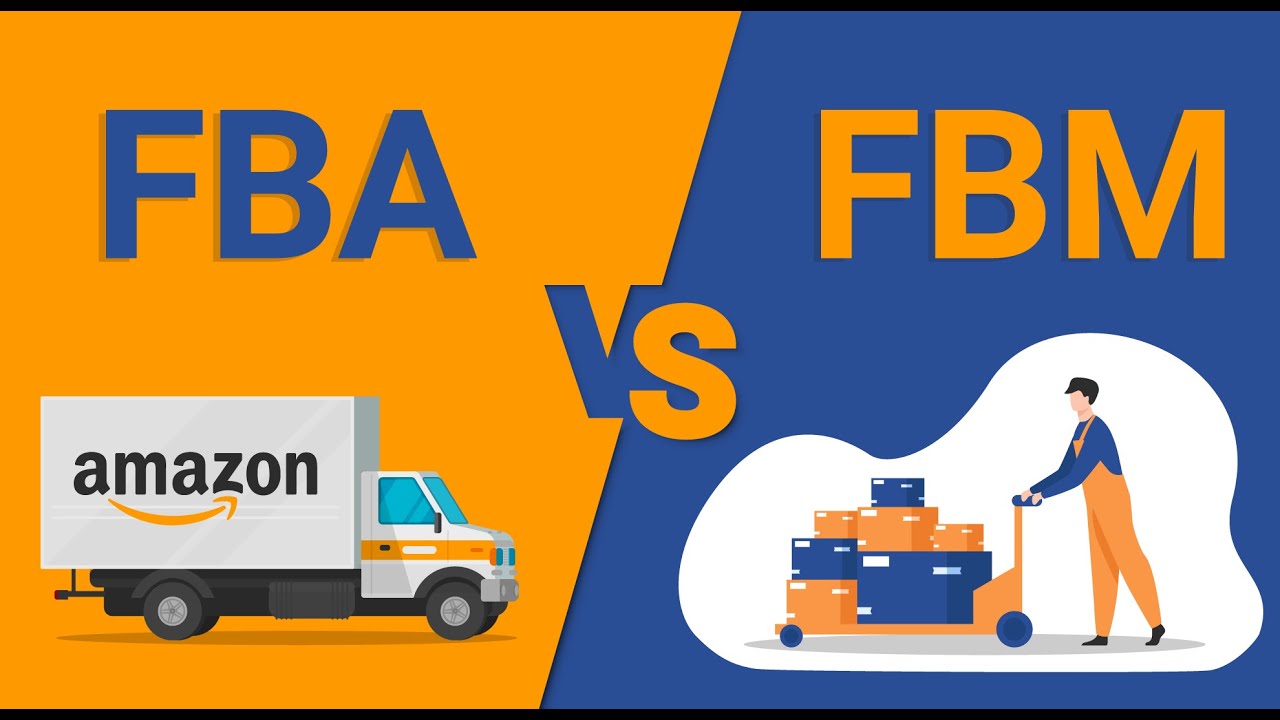
Choosing either Amazon FBA or Amazon FBM is probably one of the biggest choices you will face as an Amazon seller – and should be carefully considered, taking into account the specifics of your products and business.
Here’s how Amazon FBA operates: You ship your products to one of Amazon’s numerous fulfillment centers across the nation (or even internationally), and then Amazon takes care of everything else.
This includes fulfilling orders and shipping items, dealing with customer inquiries, handling returns, and issuing refunds. Your items will have the Amazon Prime label attached to them, making them eligible for Amazon’s fast two-day (or even faster!) delivery promise.
Also, the company’s client services team is one of the best and will take care of all inquiries efficiently. Finally, products sold through FBA usually enjoy higher search rankings because, as far as Amazon knows, it fully controls them.
But there are also cons. The costs associated with FBA include fees for storage and individual unit fulfillment, which may be high in case of bulky or heavy products or those that are hard to sell. You have no control over the process itself, which means you are limited with regard to tracking your shipments. Fees for storing inventory for a long period can reduce your profit if it takes longer to ship products.
The con here is that all those tasks will take much effort, especially if your turnover increases. Also, the absence of the Prime badge makes your sales conversions worse.
Summary: Amazon FBM vs Amazon FBA.
How to Optimize Your Amazon Product Listings
This listing serves as your storefront, your sales rep, and your marketing piece, all combined into one. Not only does an optimized product listing rank better on Amazon, but applying strong technical SEO and following the latest SEO trends can also improve long-term visibility. This is how you can make sure yours does both.
Create a keyword-dense product title. The product title is one of the most critical components when optimizing for Amazon SEO because the algorithm analyzes it heavily to decide which search queries your listing should be shown for.
A good Amazon title should contain your target keyword (your primary search query), brand name, product features such as size, color, material, number of units, and anything else that may qualify as relevant keywords. Do not go over 200 characters; start with the most valuable information; and do not forget that it needs to sound right to real people, too.
Create five bullet points that sell. Amazon offers five spots for bullet points on its listing pages — utilize all five of them wisely. Start every bullet point with a capitalized advantage or feature title, followed by an explanation of why that particular feature would be important to the buyer.
Make sure that you work secondary keywords into every bullet point naturally. Try to answer the most frequent questions and objections of prospective customers upfront. And remember to write from their perspective – emphasizing how the product would benefit them rather than just describing the product itself.
Write a strong product description. Product description offers up to 2,000 characters of text space for you to convince your visitors to purchase. Use this space to tell your product’s story, explain in more detail its features you mentioned earlier, create an emotional bond with your ideal customer, and alleviate any final objections they may have.
How to Drive Traffic to Your Amazon Listings
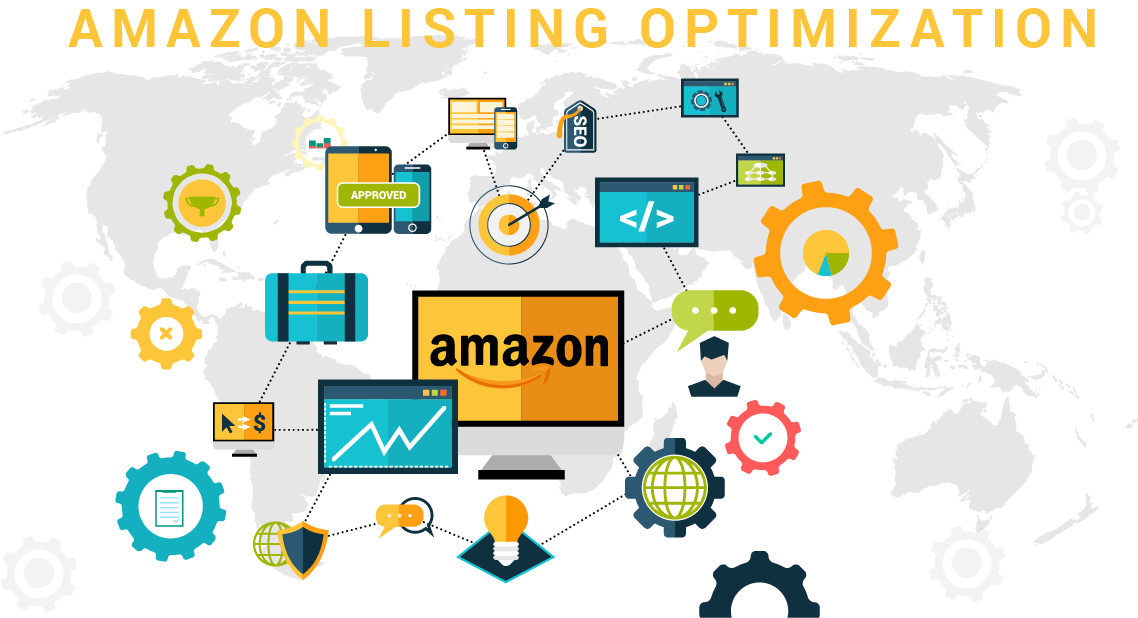
The most perfectly optimized listing will fail to generate any sales if there are no visitors coming to it. Getting traffic – both from within the Amazon marketplace and from outside sources like social media marketing and YouTube advertising – is absolutely crucial for growing your Amazon business. These are the most effective ways to drive traffic to your products and make money through sales.
Amazon PPC Advertising. The Sponsored Products ad system by Amazon offers the best and most trackable method to get traffic to your listings. When using Sponsored Products, you have to buy keywords associated with your product, and whenever customers type them in, your product shows up at the top of the search results page.
You pay per click, meaning that the moment someone decides to look into your offer, you incur expenses. However, Sponsored Products are a very efficient way to drive traffic. To begin with, run automatic campaigns to learn the keywords your product converts well on.
Later, create your own manual campaigns, focusing on the most profitable keywords. Keep tracking your Advertising Cost of Sales – this percentage represents how much of your revenue goes to the advertising expenses.
Optimize for Amazon SEO to increase organic ranking. The algorithm used by Amazon in determining which products will be listed at the top in organic search results is referred to as A9, and being ranked at the top of organic search results is the least expensive way of generating organic and long-lasting traffic.
Factors considered when ranking in organic search results include sales velocity, conversion rates, customer reviews, and even website speed optimization principles that improve user experience (your sales against your competitor’s), conversion rates (the percentage of people who buy the product on your listing against the number of people visiting your listing), reviews and ratings, the completeness and relevance of the listing, and competitive pricing.




This 2026 beginner’s guide is incredibly timely, especially given the rapid evolution of selling strategies and platform algorithms. I particularly appreciated how you broke down the transition from traditional retail to the Amazon ecosystem, offering actionable insights that go beyond standard advice. It effectively bridges the gap for new sellers looking to navigate the complexities of modern e-commerce with confidence.
Thank you for such a thoughtful and detailed comment! I’m really glad the guide resonated with you, especially the focus on helping new sellers understand the shift from traditional retail to the Amazon ecosystem. The goal was to make the process more practical and approachable while offering insights that go beyond the basics. I truly appreciate you taking the time to share your perspective and feedback!
I’ve been following your blog for quite some time now, and I’m continually impressed by the quality of your content. Your ability to blend information with entertainment is truly commendable.
You’re pleasure sir!